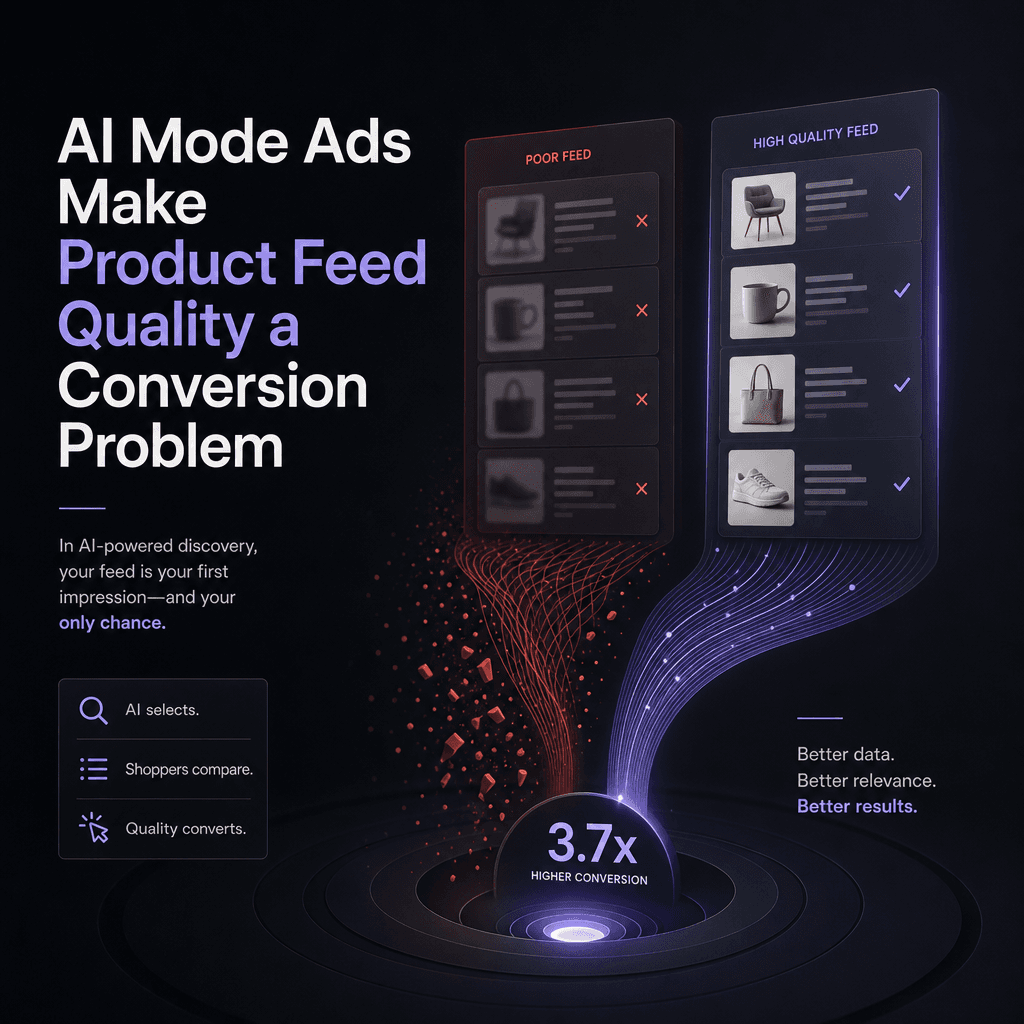
AI Mode Ads Make Product Feed Quality a Conversion Problem
Brodie Clark caught the shift in a screenshot this week: sponsored ads are now being mixed into Google AI Mode results instead of sitting at the end of the answer. His post pulled 67 likes, 31 bookmarks, and more than 6,000 impressions because it names a fear a lot of operators already feel. The ad is no longer just bidding for a slot. It is being interpreted inside the answer.
That matters for DTC teams because Google has now confirmed the bigger system change. At Google Marketing Live 2026, Google said it is testing Conversational Discovery ads and Highlighted Answers in AI Mode, both built with Gemini. It also described AI-powered Shopping ads that can pull relevant products and write a custom explainer for why a product fits a search. In the commerce update, Google said its Universal Commerce Protocol work will bring faster checkout paths into Shopping and YouTube surfaces, while new product description tools are meant to match how people ask conversational buying questions.
The operator takeaway is simple: your product feed is becoming creative, sales copy, and objection handling at the same time.
In the old paid search workflow, a media buyer could separate the pieces. Keywords lived in one place. Product titles and attributes lived somewhere else. Landing pages carried the persuasion. The campaign structure mattered most when the buyer already knew roughly what they wanted.
AI Mode compresses that path. A shopper can ask, "what is a good low-maintenance scent for a small apartment?" and the system may decide which products deserve to appear, which details should be explained, and how the sponsored result fits the answer. That means weak attributes, generic descriptions, stale bundles, missing use cases, and confusing variant data all become paid media problems.
We check this kind of shift through three questions.
First, can the account answer messy buyer language? Most product feeds are built around internal catalog logic. Real shoppers ask in situations: small apartment, sensitive skin, gift under budget, rainy climate, first-time setup. If your feed only says "premium candle, 8 oz, soy wax," AI has less to work with.
Second, does the offer survive inside an answer? In AI Mode, a product can show up next to an explanation, a comparison, or a recommendation list. The offer has to be specific enough to be selected and clear enough to be trusted without the shopper reading five pages first.
Third, does the landing page confirm the same story? If the AI result says one thing and the product page buries the proof, conversion will leak. The paid click becomes more expensive because the customer has to rebuild confidence after the handoff.
This is where we think DTC teams should slow down before they chase another campaign hack. The work is less glamorous than a new bid strategy, but it is more durable: clean product data, better category language, stronger PDP proof, offer clarity, and weekly checks for how Google and Meta are changing the discovery surface.
Auxora is being built around that operating reality. We do not think founders need another dashboard to stare at. They need a system that watches the account, the creative, the product page, and the buyer journey together, then flags where the story breaks. AI can catch patterns quickly. A human operator still needs to judge whether the recommendation makes business sense.
For DTC brands running Meta and Google, the next edge is not just feeding platforms more assets. It is making sure every asset, feed field, and landing page section can answer the buyer's real question.
If you want to see where your funnel may be losing trust in the AI search shift, run a free GTM report with Auxora. We will check the account like operators, not like a generic audit template.
Sources
- Brodie Clark on sponsored ads mixed into Google AI Mode results, verified with X API metrics on May 26, 2026.
- Google, "A new generation of ads for the AI era of Search," published May 20, 2026.
- Google, "How we're helping retailers thrive with new Universal Commerce Protocol features and AI tools on Google," published May 20, 2026.